
Screens, Steel, and Gold: The Results from RENAS
What happens to the valuable resources in the screens we throw away? The results from RENAS and Terravera show that recycling them avoided around 2,700 tonnes of CO2e in 2025, and that keeping some screens in use for two more years would raise that benefit by a third (Andersen & Sævareid, 2026).
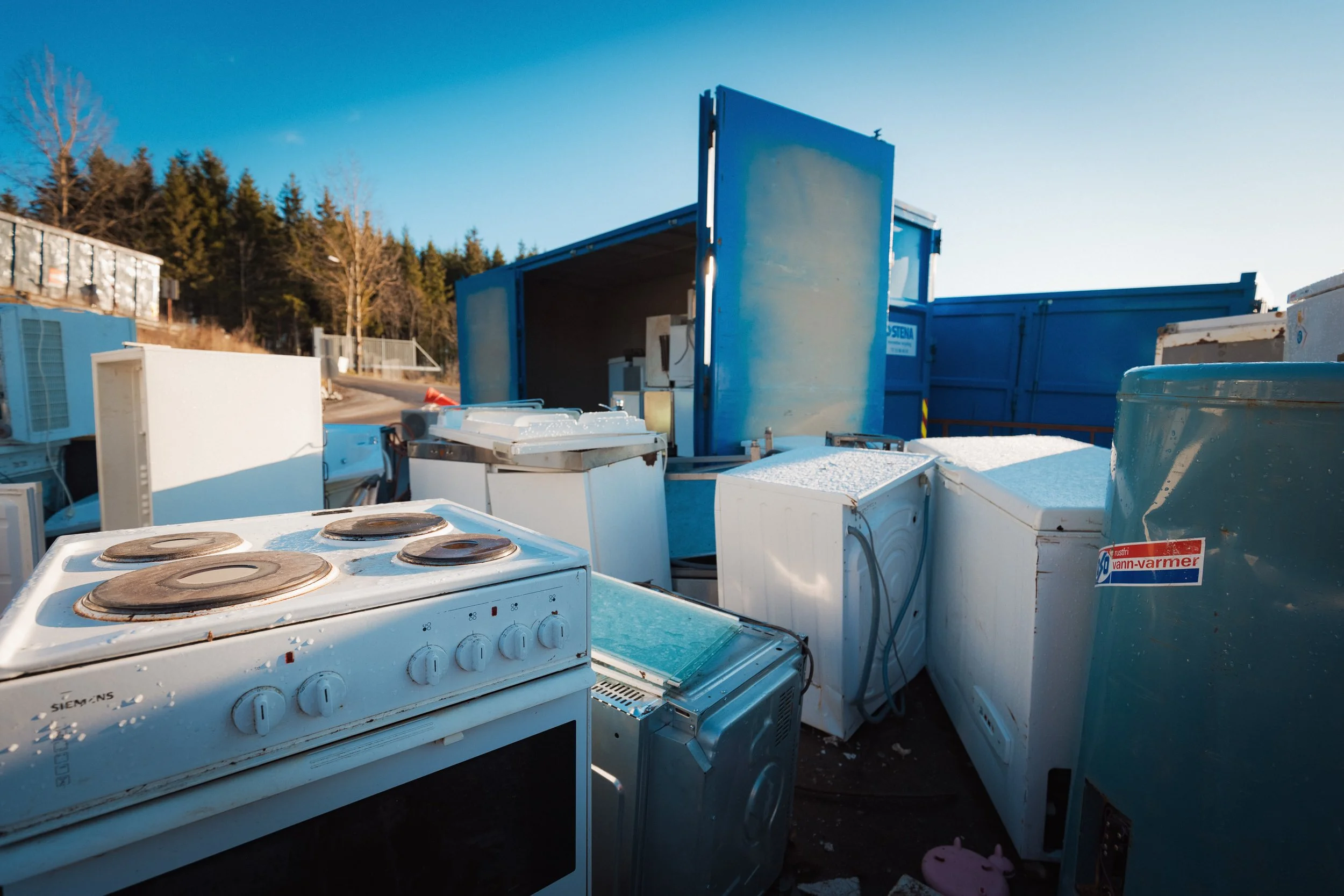
RECYCLE: These items are more valuable than you think.
RENAS set out with Terravera to understand the true value of the metals and minerals in electronics, and where recycling, repair and reuse make the biggest difference (Terravera, 2026). The first answers are now in, based on the screens RENAS handled in 2025.
Results
| The question | What the model found |
|---|---|
| What does recycling screens achieve? | Around 2,700 tonnes of CO2e avoided in a year, mostly from plastic casings and steel frames. |
| Which materials matter most? | It depends on what you measure. Steel matters most for energy and water, gold for mining and scarce resources. |
| What about land and water? | Recycling spared mining land equal to a fifth of a football pitch, and eased pressure on water in dry mining regions. |
| What does transport cost? | About a seventh of the climate gain, mostly from trucks. |
| Does a longer screen life pay off? | Yes. Two extra years add a third to the benefit, three years add two-thirds. |
Gold - a valuable resource
Steel and plastics deliver most of the climate benefit because there is so much of them, but a few kilograms of gold make a big impact on resource scarcity (Andersen & Sævareid, 2026).
Only 7.2 kilograms of gold were recovered from all the screens. Even so, gold, silver and palladium account for 142 tonnes of the CO2e saved. Mining and refining these metals from scratch causes very high emissions, so every gram that is recycled makes a real difference (Andersen & Sævareid, 2026; Nuss & Eckelman, 2014; Cespi et al., 2025).
That small amount of gold also matters more than any other material for protecting scarce natural resources and avoiding new mining areas.
RENAS is Norway’s leading Producer Responsibility Organisation (PRO), specializing in electrical and electronic equipment (EEE) and batteries.
With nearly 2,500 members, RENAS is committed to helping its members shift from merely managing waste to recycling, reuse and recover materials in producing new products. Photo: RENAS
Two More Years Makes the Difference
In our first article, RENAS asked what would happen if a company kept its screens two or three years longer instead of replacing them (Terravera, 2026). Now there is an answer.
The result depends on how long the screens stay in use. With one extra year, the total climate benefit is 2,664 tonnes of CO2e. With two years it rises to 3,554 tonnes, and with three years to 4,444 tonnes (Andersen & Sævareid, 2026). The estimate builds on the emissions from producing a new screen (US EPA, 2019) and from refurbishing one (ADEME, 2022).
From Data to Better Decisions
Head of Marketing, Katarina J. Haugersveen, at RENAS reflects on the results.
“Carbon is only part of the story. Understanding the materials we depend on and the natural resources needed to produce them, such as freshwater and land, is just as important. Access to these resources is fundamental to doing business in the years ahead,” says Haugersveen.
Recycling is essential, but it will not be enough to meet the growing demand for raw materials, she points out. Products and components must also stay in use for longer, and that opens up new business.
“EU regulation is pushing the industry in this direction, but the market is moving too. Consumers and professional buyers are looking for alternatives to buying new, and businesses are already finding new revenue streams through repair, upgrades and resale. There is a real commercial opportunity for companies that get ahead of this shift," says Haugersveen.
That is where the model comes in.
“Our ambition is to give people working in procurement, sustainability and business development a better understanding of the potential consequences of their decisions, before they make them.”

FOREFRONT: Haugersveen wants companies to understand the consequences of their decisions before they make them.
LED Screens Are Just the Beginning
RENAS now wants to connect with companies that make, sell, buy or use LED screens, to test the value of the model in practice. The next step is to find out which business decisions it could support, which insights matter most, and how it could become part of everyday decision-making.
Meet the modeller
Marius Andersen is doing the data modelling for RENAS. Get to know Marius in this article.
Sources
ADEME (2022). Étude sur la durée de vie des équipements numériques et son allongement par le reconditionnement. Link
Andersen, M. O. & Sævareid, A. (2026). RENAS Milestone 2: Return on Impact for waste display equipment. Terravera Foundation. Unpublished report to RENAS.
Cespi, D. et al. (2025). LCA of precious metals recovery. Cleaner Environmental Systems, 19, 100310. doi:10.1016/j.cesys.2025.100310
Nuss, P. & Eckelman, M. J. (2014). Life cycle assessment of metals: A scientific synthesis. PLOS ONE, 9(7), e101298. doi:10.1371/journal.pone.0101298
Terravera (2026). From E-Waste to Resource Intelligence: RENAS Partners with Terravera.
US EPA (2019). WARM version 15: Electronics. Link
