
Fremtind
Case
New Car Parts Emit 150 to Over 5,000 Times More CO₂ Than Repairs: Modelling Climate Impact in Insurance Claims
Fremtind partnered with the Terravera Foundation to model the CO₂ emissions of four ways to handle a damaged car: repairing the part, replacing it with a used part, ordering a new part, or scrapping the vehicle. For the most frequently repaired structural parts, a new part emits 150 to over 5,000 times more CO₂e than a repair.
Fremtind initiated the modelling to replace estimates with an outdated documentation basis for reporting emission reductions from repair and reuse.
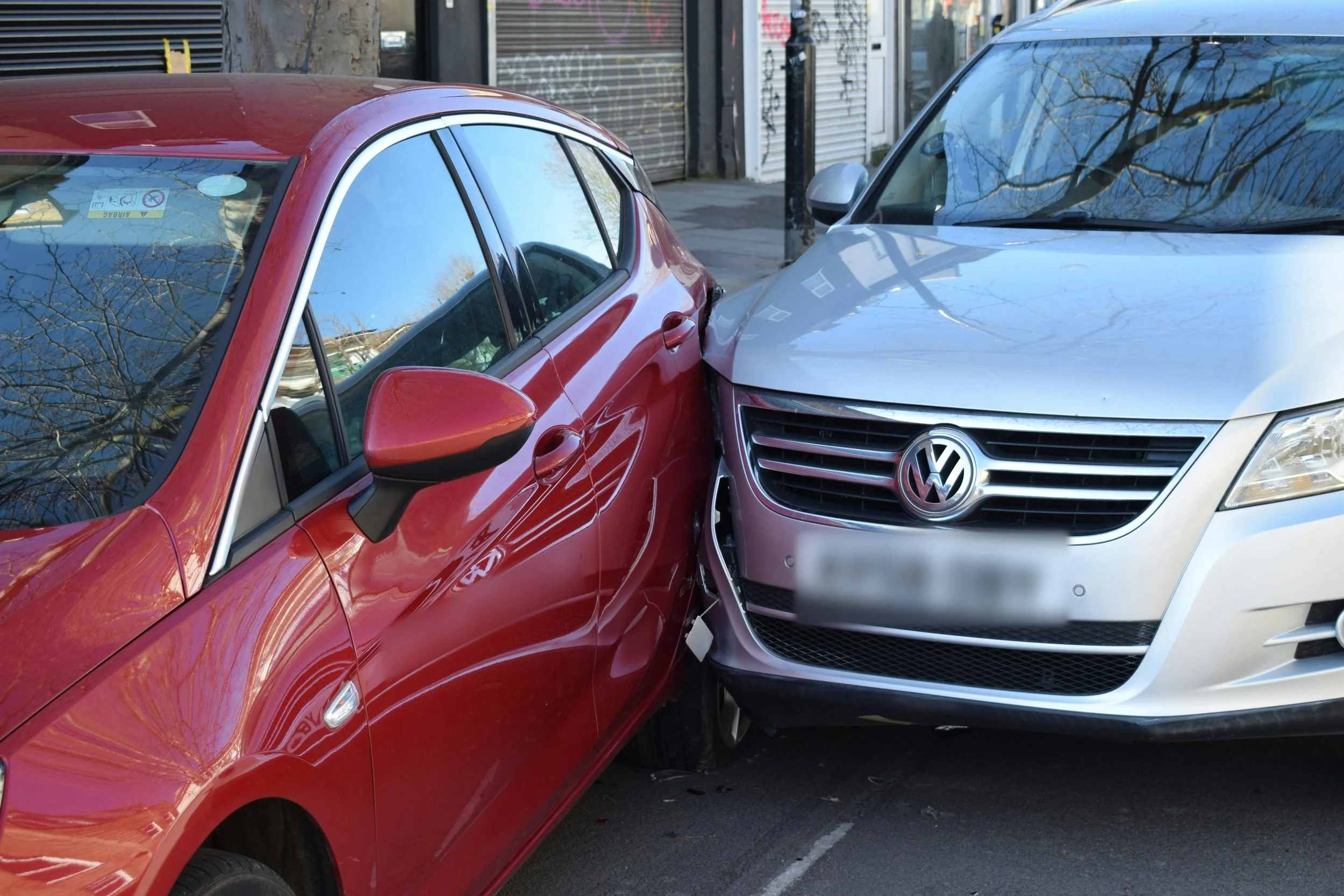
Every car claim starts with a choice: repair the damaged part or replace it with a new one. For a front door, that choice can mean 0.1 or 71 kg of CO₂e. Photo: Usman Malik, Unsplash
Why Does Repair Versus Replacement Matter for an Insurer?
Every car claim involves a choice between fixing and replacing. Fremtind's own claims data, filtered to repairs above NOK 4,000, determined which parts were modelled, so the model reflects the decisions Fremtind actually makes.

Terravera data modelling
What was modelled: 21 of the most frequently damaged car parts across 13 car models, from raw material extraction to waste sorting.
What the model does: Calculates CO₂e from production, transport to Norwegian workshops, workshop energy use and waste handling.
Core comparison: Repair vs. used part vs. new part vs. scrapping.
Output: kg CO₂e per part, scenario, car model and workshop location, available in Terravera's TerraLight platform.
What Did the Model Show?
Part New part Repair (Numbers in kg CO₂e)
Averages across 13 car models, delivered to Oslo.
Bumper 38.8 / 0.26
Windshield 33.4 / 0.06
Front door 71.1 / 0.10
Hood 75.9 / 0.06
Rims 173.1 / 0.03
The car model matters. A new front door ranges from about 31 kg CO₂e (VW Golf) to 155 kg (Porsche 911).
Transport is negligible. Shipping a part from the factory to a Norwegian workshop typically adds a few kilograms, a small fraction of production emissions.
What the findings show together: the decisive emissions lie in making new material, not in moving it or in workshop hours. Repair first is the clearest lever an insurer controls.

This diagram highlights key sources of GHG emissions throughout the automotive repair lifecycle, from raw material extraction to waste sorting, revealing opportunities to reduce environmental impact.
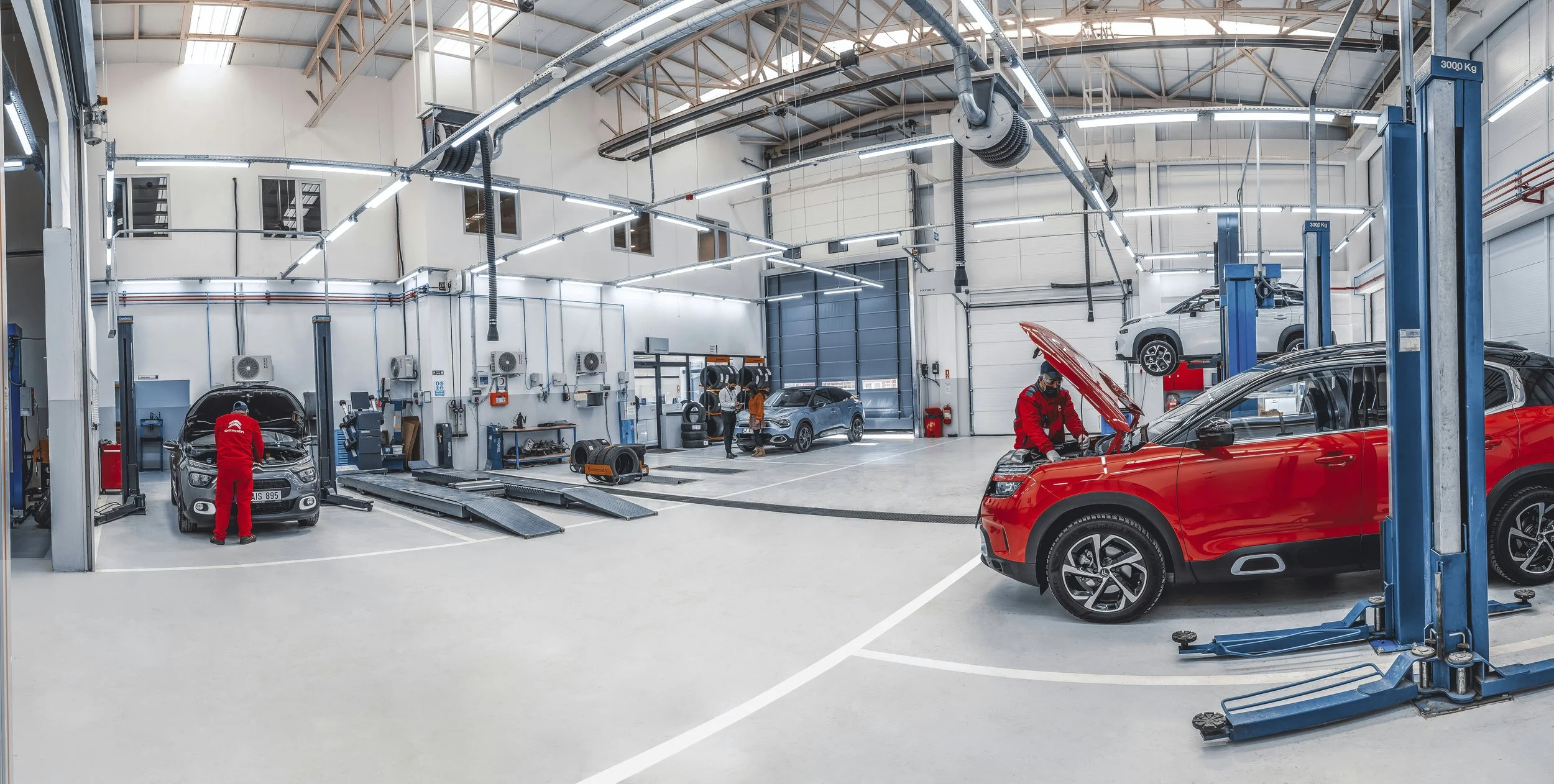
Workshop time adds very little to the climate footprint of a repair. In the model, the energy used to fix a part is a small fraction of what it takes to produce a new one. Photo Mehmet Talha, Unsplash.
Why This Matters Beyond Cars
The same question applies wherever something breaks: repair, reuse or replace. Modelling makes the trade-off measurable before the decision is made, rather than after.
Methodology and Sources
The analysis combines Fremtind's claims data with published life cycle data, including
Buberger et al. (2022), Renewable and Sustainable Energy Reviews; AGC Glass Europe (2023),
EPD Laminated Glass; World Steel Association (2023),
Sustainability Indicators; Thiel & Jenssen (2000), SAE; NVE (2024), Electricity Disclosure.
Limitations
Results use Norwegian location-based electricity (0.015 kg CO₂e/kWh). With a market-based factor (0.599), repair emissions rise 40-fold and the gap narrows sharply for light plastic parts.
Some part weights come from retailer data, and windshields are simplified to laminated glass.
Meet the Data Modelling Team
Jørgen Brones Stenersen and Andrea Sævareid (former Model Leads), Henriette Strømsvåg, Torill Oldernes and Nelina Iren Wium.
