
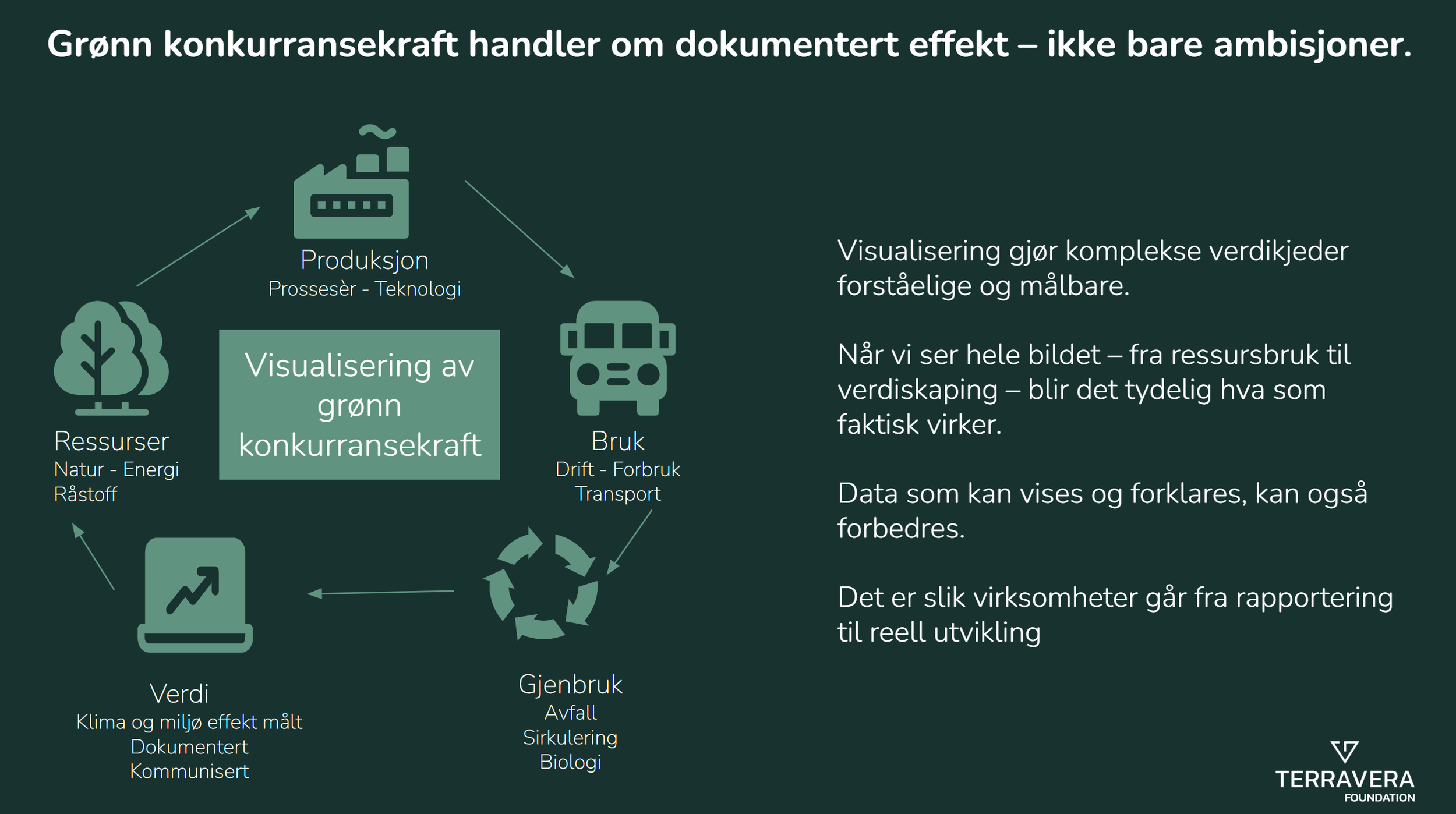
A Terravera model is a digital, research-based representation of how a product, a service, a company or an activity affects the climate and the environment across its whole life cycle.

Example from Lerum, where we modelled the packaging – glass, plastic and cardboard – from production through transport to the factory.
The goal is simple:
To make climate and environmental impact measurable, comparable and understandable – so decisions can be based on facts, not gut feeling.
The whole life cycle – not just one part
A Terravera model looks at the whole system, not just one indicator or one source of emissions.
We model impact across the whole value chain:
Raw materials and resource extraction
Production and processing
Transport and logistics
Use phase and performance
End of life: reuse, recycling, landfill, energy recovery
This way we avoid hidden emissions and wrong conclusions – and see clearly which parts of the value chain have the greatest effect.
All logic and assumptions are visible
All key assumptions are documented and shown openly, including:
the functional unit (what we are actually measuring)
material quantities and composition
energy use and energy mix
transport distances and modes of transport
methodological choices and system boundaries
data sources, uncertainty and quality
This makes the model:
verifiable
built to be reviewed
something others can rely on – including people outside the company

From input to insight – scenarios in real time
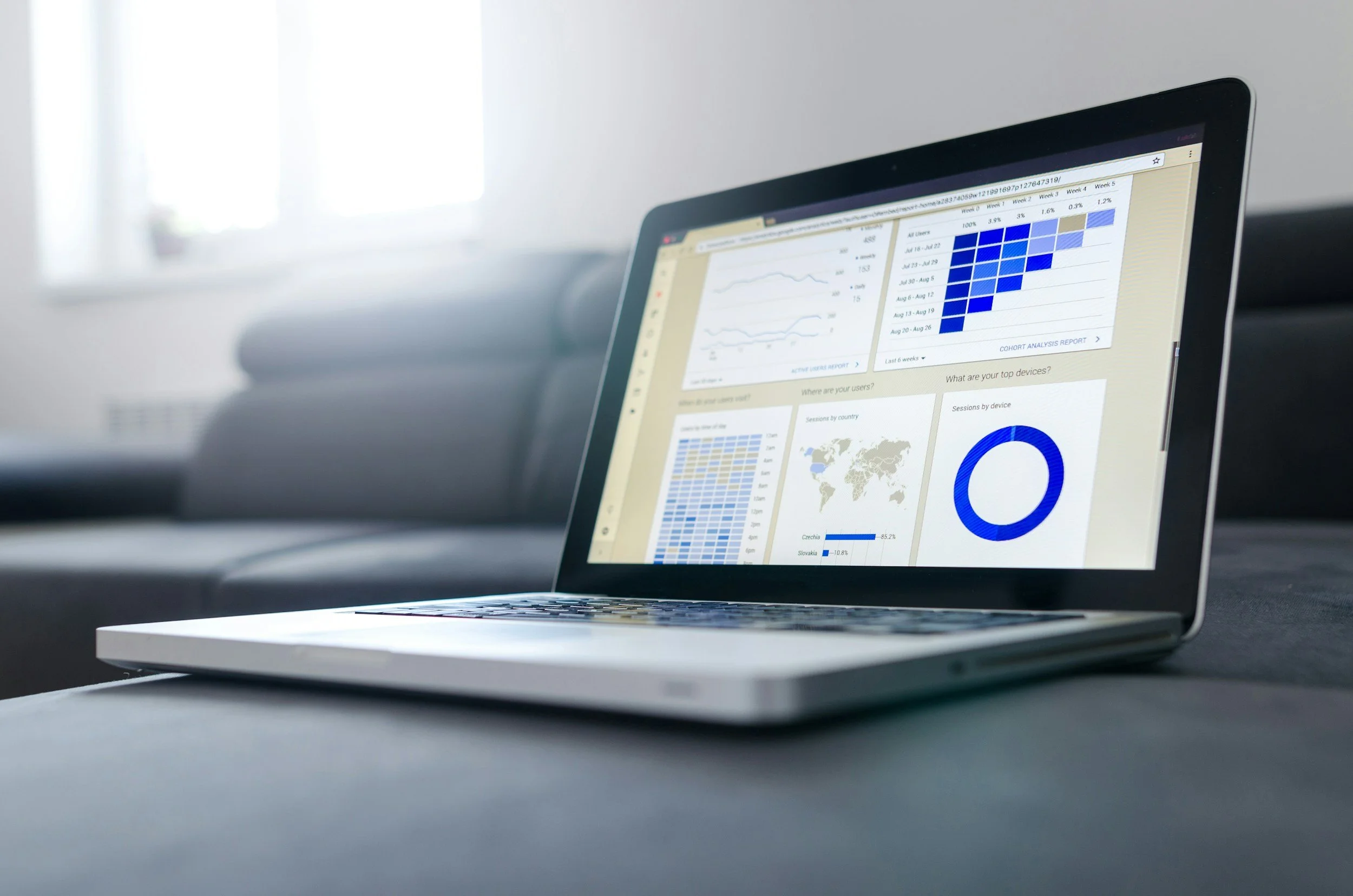
Terravera models are made to be used actively, not just read as a PDF.
Users can change the inputs and immediately see how the results change, for example:
change the energy source → see how emissions change
switch the mode of transport → see the avoided emissions
choose a different material → see the new footprint
test new solutions → see what gives the greatest benefit
This makes the model a living decision tool, not a static report.
Built from modules – reusable across industries
Terravera models are built from reusable building blocks.
Examples of modules:
Material modules (glass, aluminium, plastic, steel …)
Energy modules (Norwegian, Nordic and European electricity mixes, different fuels …)
Transport modules (car, ship, train, plane – short and long distance)
Industry- and category-specific modules (clothing, groceries, mobility, aquaculture, restaurants and more)
This modular approach lets us:
scale to thousands of products and services
keep the method consistent
adapt the level of detail to each project
Digital, API-ready and built for scale
Where traditional LCAs often end as a single report, Terravera models are made for:
API integration (with receipt data, ERP systems, platforms, banks and more)
real-time queries and scenario analysis
connection to transaction data (for example purchases in stores or online)
portfolio-level insight for banks, investors and retail chains
In short:
Terravera makes it possible to assess climate and environmental impact at scale – from a single product to an entire portfolio.
Research-based, independent and verifiable
All Terravera models are built on open, research-based principles and use data from sources such as:
peer-reviewed research
LCA databases and environmental product declarations (EPDs)
industry reports and public data
manufacturer data and technical documentation
The models follow international standards (such as LCA principles and ISO frameworks) where possible, and are documented so they can be reviewed both professionally and by regulators.

We always start by gathering existing research and open data sources that are relevant to the specific question we are working on.
In summary
A Terravera model:
shows the whole life cycle – not just one part of it
makes all assumptions and calculations visible
lets you test “what if” scenarios in real time
is built from modules that are reused across projects and industries
is digital, API-ready and can be integrated into your existing systems
is research-based, open and verifiable
This is the core of our work with partners
Terravera does not deliver opinions or recommendations.
We deliver objective models that our partners use in decisions, portfolio work, innovation and dialogue with their customers, board and market.
This is how Terravera helps companies, researchers, public bodies and the finance sector understand:
What is the actual impact – and what should we do more of?
“Terravera is a technology foundation that develops open, verifiable models to assess sustainability across the whole life cycle.
Where others deliver reports, figures or scores, we deliver technology – objective frameworks that partnerships and sectors can use, test and build on.”
