
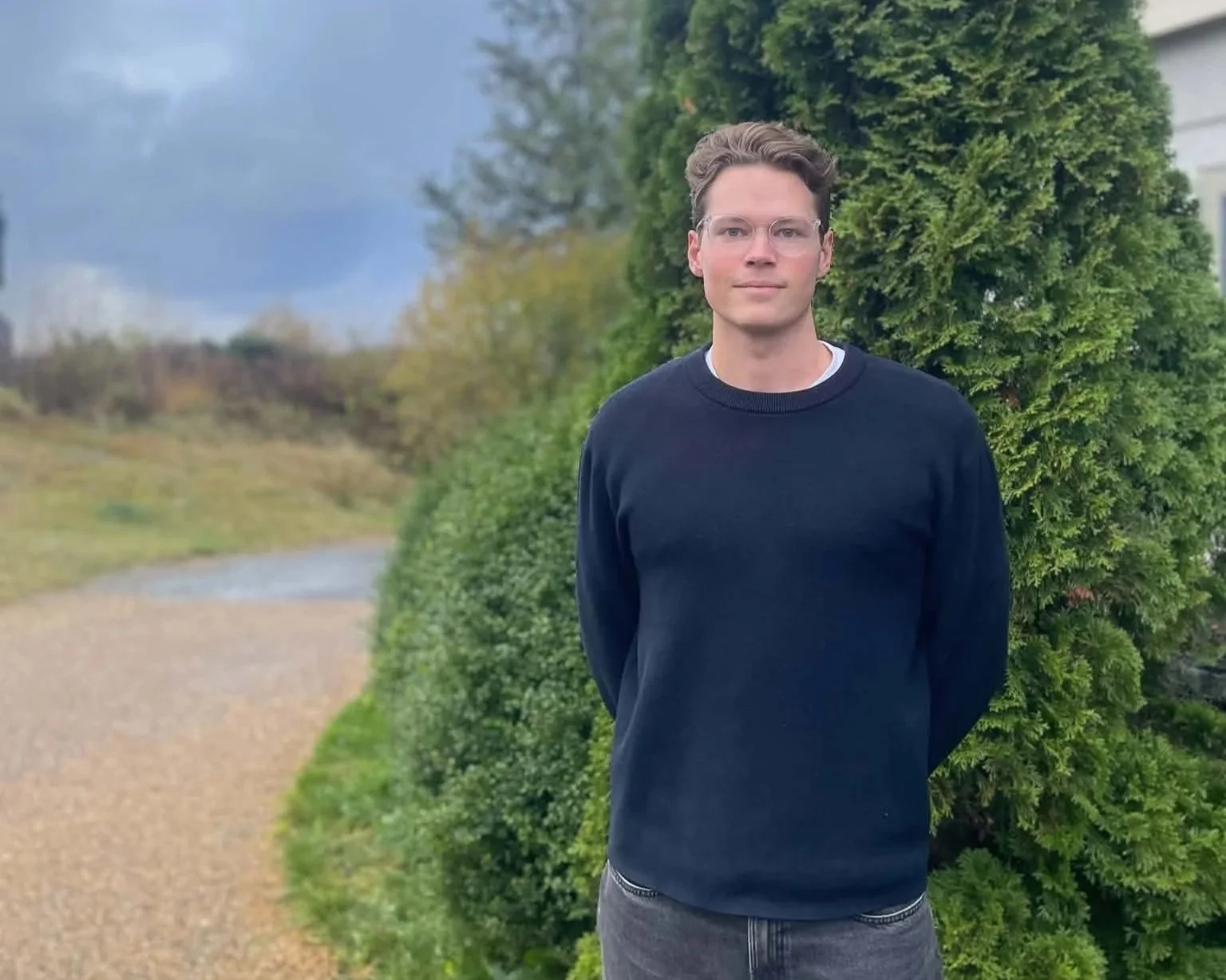
Terravera Foundation is pleased to introduce our modeller, Tobias Torjussen Osgjelten. Currently completing a MSc in Financial Economics with a minor in Energy, Natural Resources and the Environment at the Norwegian School of Economics (NHH). He believes that while sustainability debates often remain at an abstract level, companies ultimately make decisions based on whether the underlying numbers make sense.
Discovering Terravera Through Sustainable Finance
Tobias first learned about Terravera during a guest lecture in the Sustainable Finance course at NHH. He was drawn to Terravera by the opportunity to apply financial modeling and quantify sustainability data for real client cases, bridging the gap between sustainability discussions and actionable decision-making.
Advising Terravera’s practice students from UiB
In his first project at Terravera, Tobias is serving as a modeling lead and advisor for four practice students from the University of Bergen (UiB). Together, they are conducting life cycle assessments (LCAs) for Fana Sparebank to find the effect of adding insulation on energy-use and greenhouse gas emissions. Looking ahead, Tobias aims to develop open, reusable models that organizations can continuously build upon long after initial reports are completed.
A solid analytical foundation
Tobias's analytical foundation spans both practical industry advisory and quantitative academic research. During his summer internship at Multiconsult Renewable Energy Advisory Services, he worked in a multidisciplinary team alongside three engineers on a feasibility study for a hybrid solar and hydropower plant in Africa. His role focused on translating technical engineering inputs into key financial metrics for investment decisions, as well as assessing the commercial landscape.
Data-Driven Analytics
At NHH, he further developed his quantitative expertise in the Energy Industry Analytics course, writing a research paper using a difference-in-differences model to evaluate how electricity price subsidies (Norgespris) affected consumer energy conservation. Tobias views the energy sector as the fundamental engine of economic growth, where the most critical decisions of the green transition take place.
"It’s easy to deliver a report that gets read once, but it’s both harder and far more valuable to create a model that companies can continue to build on themselves - and that others can eventually use as well."
