
Stingray Marine Solutions
Ecosystem Impact of Salmon and Rainbow Trout Escape During Sea Lice Treatment
Case
Stingray Marine Solutions partnered with the Terravera Foundation to assess how sea lice treatment operations influence the risk of fish escape and the resulting ecosystem impacts in Norwegian salmon farming.
The analysis shows that escape events are closely linked to handling-intensive delousing operations. When fish escape during treatment, the consequences extend beyond production loss and include disease transmission risk, genetic interaction with wild populations, and long-term ecosystem impact.
Fish Escape in Salmon Farming and Sea Lice Treatment Operations
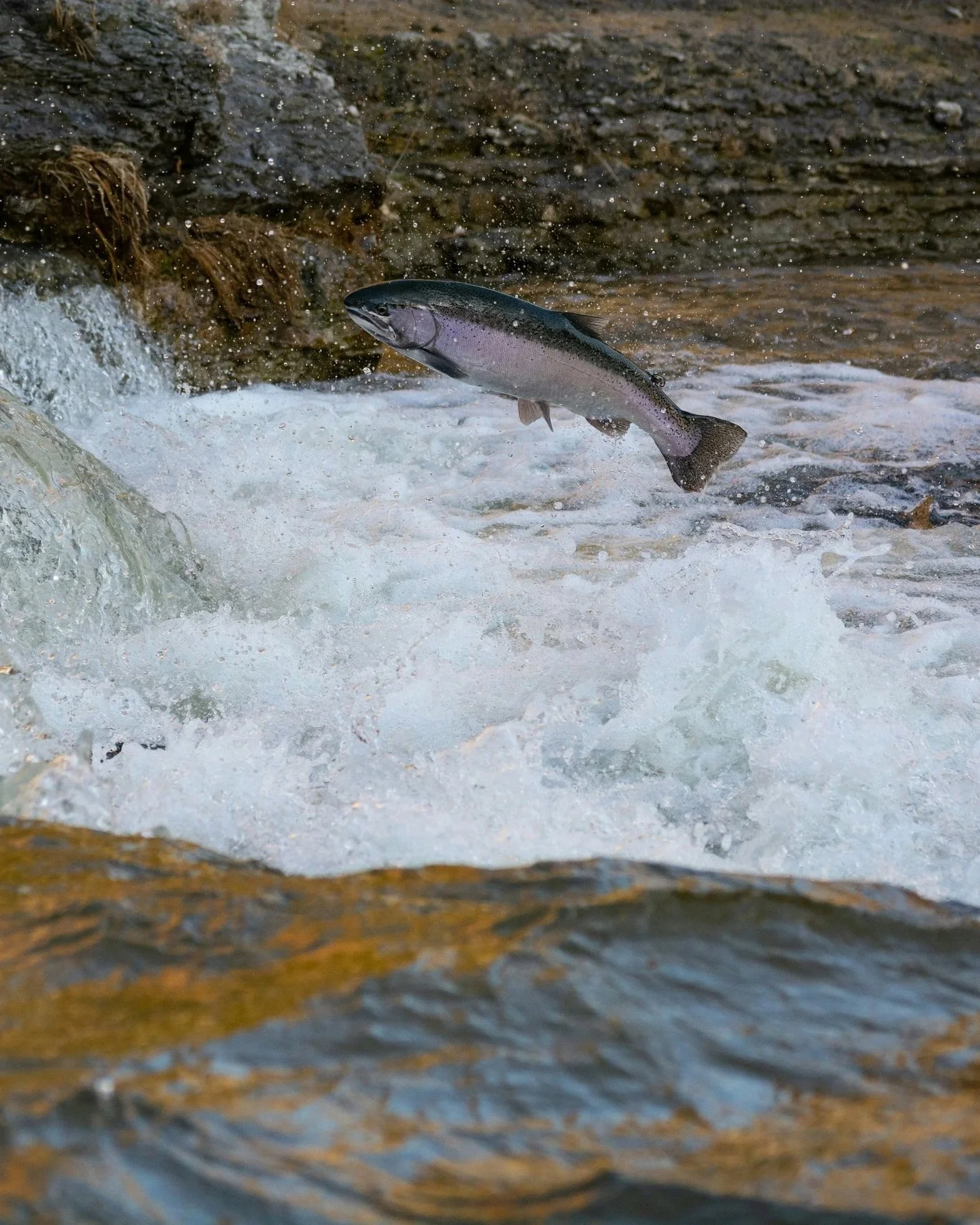
Escape events in aquaculture typically occur during operational interventions such as sea lice treatment, when fish are crowded, pumped, and handled.
These operations are necessary to manage lice outbreaks but introduce stress and operational complexity that increase the risk of technical failure or accidental release.
Data from Norwegian aquaculture shows that escape incidents are strongly associated with handling operations, particularly during delousing activities.
Disease Risk from Escaped Farmed Salmon to Wild Populations
Scientific studies show that escaped salmon often carry pathogens into the wild.
Research by Madhun et al. found that more than 90% of escaped farmed salmon were infected with one or more viruses when entering rivers. High prevalence of Piscine orthoreovirus (PRV) and Salmonid alphavirus (SAV) indicates that escapees can act as vectors for disease transmission to wild populations.
Escaped fish from treatment operations therefore represent both biomass loss and a direct pathway for pathogen release into marine and freshwater ecosystems.
Ecosystem Effects of Escaped Salmon from Aquaculture Systems
Escape events during delousing create a combined ecosystem effect that includes:
Disease transmission from infected escapees, genetic mixing with wild populations, and increased ecological pressure on already vulnerable wild salmon stocks.
Because escape is often linked to treatment frequency and handling intensity, reactive delousing indirectly increases ecosystem risk beyond the farm site itself.
Continuous Optical Delousing as a Way to Reduce Escape Risk
Stingray’s optical delousing system uses cameras, machine learning, and laser technology to remove sea lice directly inside the cage without handling fish or using vessel-based interventions.
By reducing the need for crowding, pumping, and treatment operations, the system lowers the operational conditions that typically lead to escape events.
The analysis indicates that reducing handling intensity may therefore also reduce ecosystem risks linked to escape, including disease transmission and genetic impact on wild salmon populations.
Terravera data modelling
What is being modelled
Risk of fish escape during sea lice treatment operations and downstream ecosystem impacts.
What the model actually does
The model connects handling intensity during delousing to escape probability, and links escaped fish to documented outcomes such as disease transmission and genetic interaction with wild salmon populations.
Core comparison
Reactive, handling-intensive delousing operations versus continuous in-pen treatment with reduced handling.
Output
Relative ecosystem risk from escape, including disease and genetic impact pathways.
System-Level Impact of Fish Escape in Salmon Farming
Terravera’s modelling shows that sea lice management influences not only treatment outcomes, but also ecosystem stability.
Key system effects include reduced escape risk when handling is minimized, lower pathogen transfer to wild populations, reduced genetic interaction between farmed and wild salmon, and improved operational stability during treatment cycles.
Overall, the findings indicate a shift from intervention-heavy production systems toward continuous, low-handling prevention technologies that reduce both operational and ecological risk.
Terravera System-Level Modelling of Escape and Ecosystem Risk
Terravera provides system-level sustainability modelling that translates aquaculture operations into comparable biological and ecological impact metrics.
For Stingray, this enabled assessment of how sea lice treatment strategies influence escape risk, disease transmission pathways, and genetic impact on wild salmon populations.
The modelling shows how operational design choices in aquaculture directly affect ecosystem-level outcomes beyond the farm boundary.
Selected Research on Salmon Escape and Ecosystem Impact
A. S. Madhun, E. Karlsbakk, Ø. Skaala, M. F. Solberg, V. Wennevik et al., "Most of the escaped farmed salmon entering a river during a 5-year period were infected with one or more viruses," Journal of Fish Diseases, vol. 47, e13950, 2024. doi: 10.1111/jfd.13950.
A. S. Madhun, V. Wennevik, O. T. Skilbrei, E. Karlsbakk, Ø. Skaala et al., "The ecological profile of Atlantic salmon escapees entering a river throughout an entire season: Diverse in escape history and genetic background, but frequently virus-infected," ICES Journal of Marine Science, vol. 74, no. 5, pp. 1371–1381, 2017.
Ø. Kanstad-Hanssen et al., "Escape of farmed salmon from two sites at Hitra and Frøya in Trøndelag – monitoring in rivers and removal measures summer and autumn 2024," Skandinavisk Naturovervåkning, SNA Report 03/2025, 2025.
O. H. Diserud, K. Hindar, S. Karlsson, K. A. Glover and Ø. Skaala, "Genetic impact of escaped farmed salmon on wild salmon populations – updated status 2023," Norwegian Institute for Nature Research (NINA), NINA Report 2393, 2023.
H. M. Føre, T. Thorvaldsen, R. K. Tinmannsvik and E. H. Okstad, "Knowledge and methods for preventing escapes," SINTEF Ocean AS, SINTEF Report 2019:00669, 2019.
K. R. Utne, E. B. Thorstad, K. Urdal, H. Skoglund, B. Florø-Larsen et al., "Escaped farmed salmon in Norwegian rivers in 2024," Institute of Marine Research, Report from the Sea 2025-39, 2025.
Fiskeridirektoratet, "Escape statistics and cause data," Fiskeridirektoratets statistikkbank.