
Stingray Marine Solutions
Cleaner Fish Welfare and Mortality in Salmon Farming
CaseStingray Marine Solutions partnered with the Terravera Foundation to assess the biological, operational, and ecosystem impacts of using cleaner fish to remove sea lice in Norwegian salmon farming.
The analysis shows that cleaner fish are widely used for sea lice control, but are associated with high mortality, welfare challenges, limited effectiveness, and ecosystem risks. Continuous optical delousing reduces reliance on cleaner fish and lowers overall biological pressure in production systems.
Cleaner Fish in Salmon Farming: Sea Lice Control and Industry Use
Cleaner fish (lumpfish and wrasse) are deployed in salmon pens to remove sea lice by feeding directly on salmon.
The method reduces reliance on chemical and mechanical delousing, but operates in environments designed for salmon rather than cleaner fish biology, creating systemic welfare and survival challenges.
Cleaner Fish Mortality and Welfare Challenges
Cleaner fish mortality was registered at 12.7 million fish in 2024. When including the “unknown loss” of cleaner fish the mortality is estimated to be a total of 19,8 million fish, reaching 82.1% mortality rate in 2024.
Losses are linked to disease, stress, starvation, and handling. This has made cleaner fish welfare a national regulatory priority in Norway, reflecting significant biological cost in current sea lice control systems.
How Effective Are Cleaner Fish for Sea Lice Control?
A Norwegian national study of 488 fish farms found no consistent link between cleaner fish use and lower sea lice levels.
Effects are typically short-lived and highly variable due to mortality and escape. In many systems, cleaner fish delay treatment rather than providing stable lice control.
Disease Risk and Ecosystem Impacts of Cleaner Fish
Cleaner fish can introduce pathogens into salmon systems, and escaped fish can interbreed with wild populations, causing genetic disruption.
Harvesting pressure on wild wrasse adds additional ecosystem strain. These impacts extend beyond individual farms into coastal ecosystems.
Terravera data modelling
What is being modelled
Biological and operational impact of using cleaner fish in salmon farming.
What the model actually does
The model quantifies cleaner fish deployment volumes, mortality rates, and replacement cycles across production sites, translating this into total system-level biological loss and operational burden.
Core comparison
Current cleaner fish-based sea lice control versus reduced reliance on cleaner fish under continuous optical delousing.
Output
Total cleaner fish mortality and system-level biological impact.
“The most effective way to reduce cleaner fish mortality is to reduce the number of fish exposed to the risk. Cleaner fish losses have long been treated as an unavoidable consequence of salmon farming, despite significant uncertainty surrounding the true scale of those losses. By reducing the need for cleaner fish through preventative lice control, Stingray contributes directly to improved welfare outcomes and fewer unaccounted cleaner fish mortalities.”
- Sebastiaan C. A. Lemmens, Senior Advisor Stingray
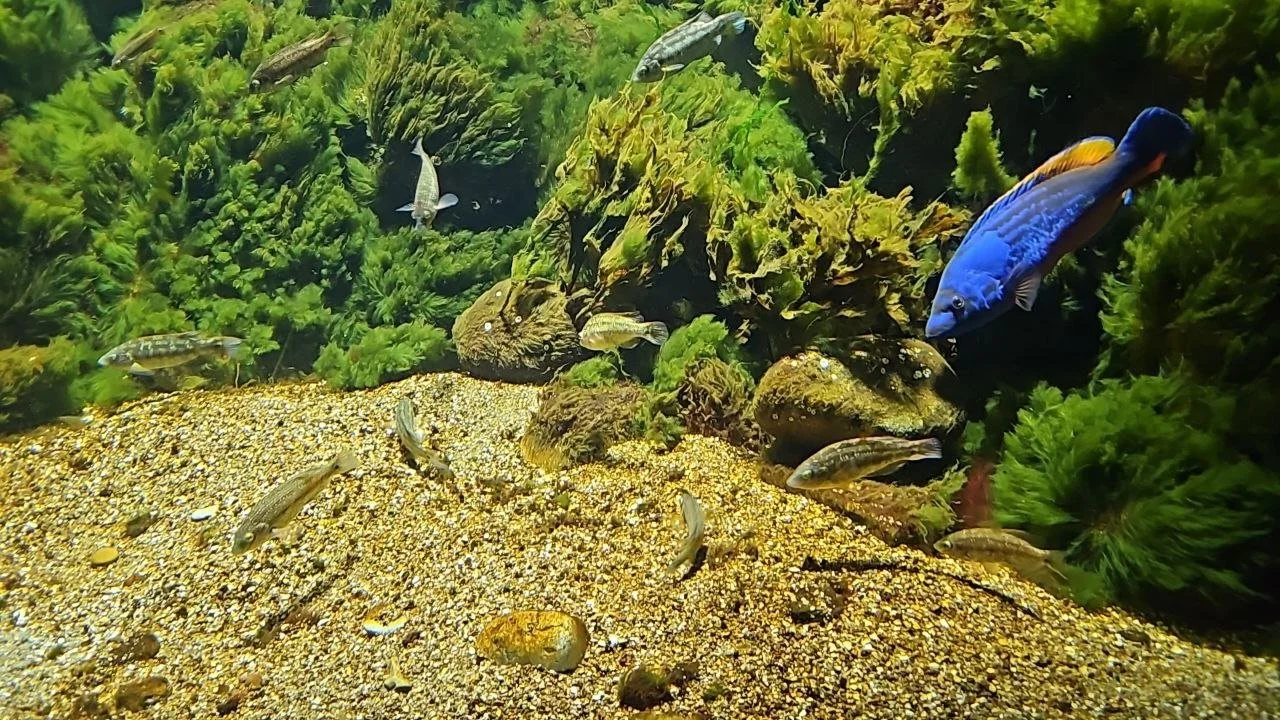
Cleaner fish used for sea lice control are sourced both from the wild, primarily wrasse caught along the Norwegian coast, and from aquaculture, primarily lumpfish.
“The modelling helped quantify how different sea lice management strategies influence not only operations, but also fish welfare and ecosystem impact.”
— Linn Kathrin Bergset, Head of Sustainability, Stingray Marine Solutions
Optical Delousing as an Alternative to Cleaner Fish
Stingray’s system uses cameras, machine learning, and lasers to remove sea lice directly inside salmon pens without fish handling.
Because it operates continuously, it reduces reliance on cleaner fish and reactive delousing operations.
The analysis shows potential reductions in mortality, welfare pressure, pathogen transfer risk, and ecological impact from capture and escape.
What Reduced Cleaner Fish Use Means for Salmon Farming
Sea lice control is shifting from biology-dependent interventions to continuous technology-based prevention.
For producers, this enables:
Reduced cleaner fish use
Lower mortality and welfare pressure
Reduced operational complexity
Lower disease and biosafety risk
Reduced ecosystem impact
Overall, optical delousing offers a more stable and scalable control model.
How Terravera Modelled Cleaner Fish Mortality and Ecosystem Impact
Terravera translates aquaculture operations into quantified environmental and biological impact metrics.
For Stingray, this enabled assessment of how sea lice strategies affect mortality, welfare, ecosystem pressure, and operational dependency across systems.
Research and Sources on Cleaner Fish Welfare, Mortality, and Ecosystem Effects
The assessment is based on peer-reviewed research, regulatory reports, and national aquaculture datasets, including:
Barrett et al., Effect of cleaner fish on sea lice in Norwegian salmon aquaculture (2020)
VKM, Risk assessment of fish health associated with the use of cleaner fish in aquaculture (2017)
Mattilsynet, Health and welfare of cleaner fish: Main priorities for 2025 (2024)
Faust et al., Cleaner fish escape salmon farms and hybridize with local wrasse populations (2018)
Halvorsen et al., Impact of harvesting cleaner fish for salmonid aquaculture (2017)
Detailed modelling quantifications and source methodology are available upon request.